
Consent Tech Becomes a Product: “Likeness Ledgers” and Auditable Digital Twin Rights
2/20/20265 min read
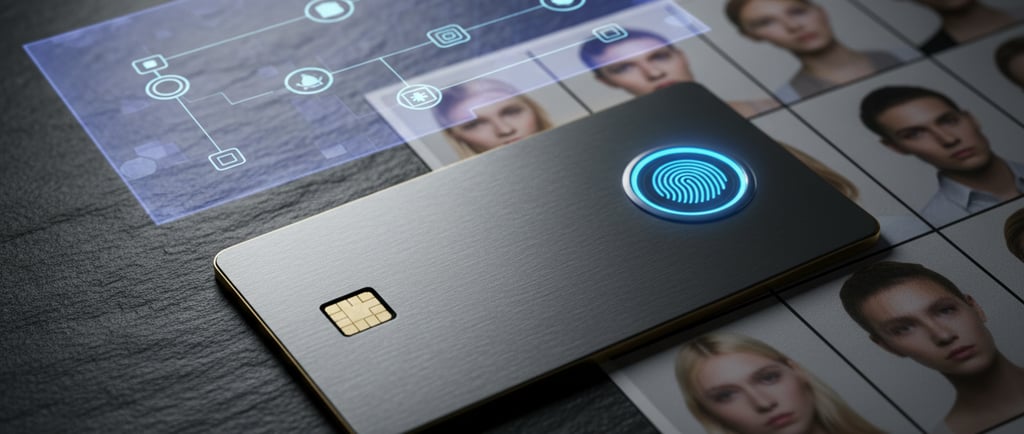
Fashion’s AI model economy is maturing fast—and on Feb 20, one shift stands out as the most commercially important: consent is becoming infrastructure. Not a PDF in a folder. Not an email thread. Not “we think we have permission.” Actual productized systems designed to prove, enforce, and audit who approved an AI likeness, for what use, in what territory, for how long, and under what restrictions.
This is the rise of what many in the AI fashion model industry are starting to treat as a new primitive: the likeness ledger—a permission system that ties a digital identity (a “twin” or AI model persona) to machine-readable rights.
If digital twins are going to sit beside human talent in the new modeling economy, the industry needs a rights layer that is as scalable as generation itself. That’s the context for today’s update: why likeness ledgers are emerging, what they look like, and how they change the power dynamics between platforms, agencies, brands, and models.
Why the old approach breaks at AI scale
Traditional modeling rights management was built for a world where usage was slow and discrete:
a campaign was shot on a specific day
assets were delivered in a fixed set
usage was negotiated with term, territory, category, and media type
enforcement was mostly legal and reputational
AI breaks that structure. Once a digital twin exists, “usage” becomes potentially continuous:
teams can generate new assets daily
localization can spin up hundreds of variants
content can be created by distributed vendors across markets
internal experimentation can quietly turn into public publication
The older rights tooling (PDF contracts + manual approvals + after-the-fact policing) doesn’t survive that kind of velocity. Brands want confidence that every generated asset was authorized at the time it was made, for the exact usage context it ends up in.
That’s what a likeness ledger is designed to do.
What is a “likeness ledger” (in plain terms)?
A likeness ledger is a system that stores and enforces permissions for AI identities, typically including:
Identity binding: which human (or authorized representative/estate) controls the likeness
Scope of consent: what the twin can be used for (ecommerce, editorial, paid ads, runway simulation, etc.)
Restrictions: prohibited categories (politics, adult content, sensitive products), styling boundaries, nudity rules, body-modification rules
Commercial terms: exclusivity windows, category lockouts, region lockouts
Time + territory: start/end dates, allowed regions
Audit trail: who approved what, when, and what model version/data was used
Crucially, it’s not just a database. In mature implementations, it’s connected to generation workflows so the platform can block unauthorized generation or flag outputs that would violate a license.
In other words: it’s rights management that behaves like software.
The shift: from “trust us” to “prove it”
On Feb 20, the competitive advantage for AI fashion model platforms is shifting from image quality alone to rights credibility. Brands, especially enterprise and luxury, increasingly ask:
Can you prove this identity is authorized?
Can you show consent artifacts and version history?
Can you enforce category/region limits automatically?
If something goes wrong, can you audit exactly what happened?
A ledger-backed system turns those questions from hand-wavy assurances into something closer to evidence: logs, permissions, and controlled access.
That matters because the cost of a rights failure in fashion isn’t just legal. It’s campaign cancellation, PR backlash, and loss of trust with talent and agencies.
How “auditable digital twin rights” actually work in production
A practical, modern rights workflow looks like this:
Consent capture (model or estate)
A model (or authorized representative) signs an agreement designed explicitly for AI.
The agreement specifies what “digital twin” means, what’s allowed, what’s prohibited, and how compensation works.
Identity verification
Platforms implement checks to prevent “lookalike theft” (someone claiming to be a model they aren’t).
Agencies often play a role as the verification layer.
Policy encoding
The contract terms are translated into machine-readable permissions: category flags, territory flags, expiration dates, exclusivity locks, etc.
Gated generation
When a user tries to generate assets, the system checks:
“Is this use-case allowed for this identity, in this region, for this brand, today?”If not allowed, generation is blocked or constrained (e.g., only internal previews, no export).
Provenance + logging
Every output can be associated with: identity, model version, timestamp, user, and license scope.
If an asset leaks or a dispute happens, the platform can reconstruct the chain of custody.
This is the big evolution: enforcement moves left—from courts and takedowns to preventative controls inside the creation pipeline.
Why this changes the “new talent economy”
Once consent becomes programmable, new business models become possible—and safer:
Residual-like payments per generation or per campaign variant
If every asset generation is logged and attributable, compensation can be automated more transparently.Exclusivity as a software feature
You can technically prevent a digital twin from being used by competing brands for a period (or by category), instead of relying on manual compliance.Talent portability with governance
A model’s twin can be licensed across multiple productions while keeping consistent restrictions—without renegotiating from scratch every time.Estate-managed legacy licensing
For iconic talent, estates can license digital twins with strict boundaries and full auditability, preserving brand alignment and preventing exploitative uses.
The talent economy becomes less about one-off bookings and more about ongoing identity licensing—but only if consent and enforcement are robust enough that all parties trust the system.
The hard problems (and where platforms differentiate)
Even with likeness ledgers, several hard challenges remain—and these will define who wins:
Ambiguity of “lookalikes”
A ledger can prove authorization for identity A, but it doesn’t automatically stop someone from generating “a different person” that closely resembles A. Platforms need resemblance detection and policy decisions about what they will allow.Downstream misuse
Even authorized outputs can be edited, composited, or republished outside the license terms. Provenance helps, but enforcement still requires operational response.Model drift and versioning
A twin can subtly change as models are updated. Brands often want consistent faces across months. Ledgers need to reference model versions and lock approved versions for campaign continuity.Cross-platform fragmentation
If each platform has its own consent format, rights become siloed. The market will pressure toward interoperable standards—but until then, agencies may become the practical “rights router.”
What brands and agencies should do next
If you’re operating in the AI fashion model space, Feb 20 is a good moment to formalize your position:
Brands: demand auditable rights, not just “we have permission.” Ask for logs, scopes, and enforcement features.
Agencies: treat digital twins like talent contracts + software releases. Build internal processes for verification, restrictions, and renewals.
Platforms: invest in rights-as-product. The winners will ship permissions tooling that’s as polished as the generation UI.
Bottom line
Digital twins are turning identity into a scalable asset. The only way that doesn’t collapse under legal and ethical pressure is if consent becomes equally scalable. That’s why “likeness ledgers” and auditable digital twin rights are emerging as the control plane of the AI modeling industry.
The next phase won’t be won by whoever generates the most images. It will be won by whoever can generate commercially usable images—with permissions you can prove, policies you can enforce, and an audit trail you can defend.
Luxury
Elevate your brand with our exclusive AI models.
Contact us
Exclusivity
© 2026. All rights reserved.
(609) 901-8073