
Ecommerce-Grade Realism: The Push for Fit-Truthful AI Models
2/27/20263 min read
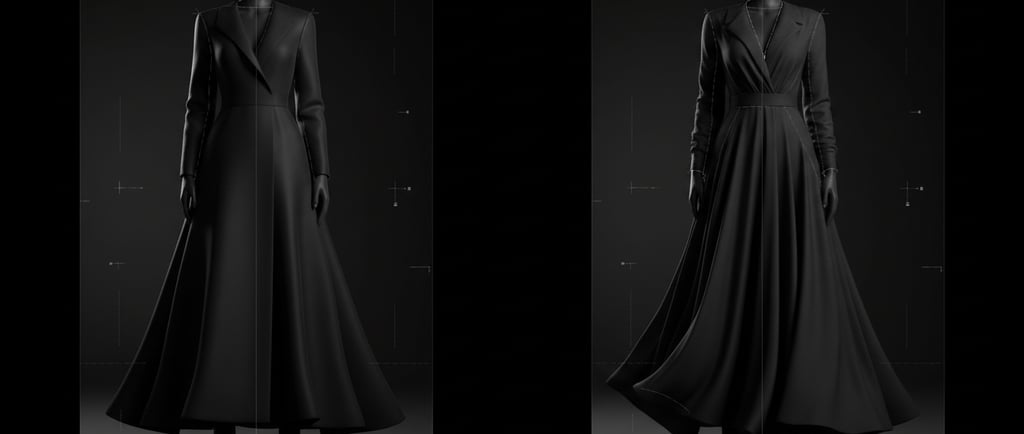
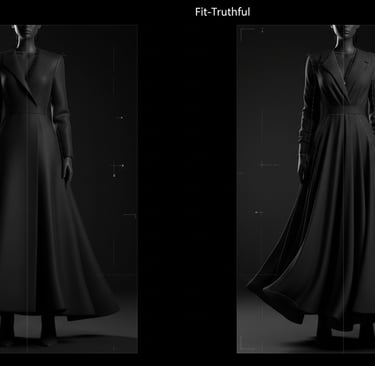
For the first few years of the AI fashion revolution, the goal was simple: aesthetic perfection. We wanted models that looked like they belonged in Vogue, with flawless skin and ethereal lighting. But as of Feb 20, the industry is facing a reckoning. Brands have realized that a "pretty" image is useless for ecommerce if it doesn't accurately represent how the clothes actually fit.
The new frontier is Fit-Truthful AI. This is a shift from "generative art" to "generative engineering." On Feb 20, the leading platforms in the AI modeling industry are competing not on who has the most beautiful faces, but on who has the most accurate garment geometry. This update explores why "fit-truth" is the key to solving fashion’s $800 billion returns problem and how AI models are being retrained to respect the laws of physics.
The "Return" Crisis: Why Pretty AI is Failing Retailers
In traditional ecommerce, a customer sees a photo of a human model wearing a size Medium. They trust that the drape, the length, and the tightness they see are a result of the garment interacting with a real body.
Early AI fashion models often "hallucinated" fit. They would make a stiff denim jacket look like soft silk, or they would ignore the way a waistband actually pinches the skin. When customers buy based on these "hallucinated" fits, the product that arrives in the mail doesn't match the expectation. The result? Massive return rates.
On Feb 20, retailers are demanding that AI model platforms move away from "style transfer" and toward physics-based conditioning. They want to know that if they upload a CAD file or a pattern, the AI will generate a model that shows exactly where the fabric will pull, where it will sag, and how it will move.
The Physics of Fabric: Training Models on Tension and Drape
To achieve "Fit-Truthful" results, the AI model industry is undergoing a massive retraining effort. Instead of just looking at millions of fashion photos, AI models are being fed data from 3D cloth simulators (like those used in high-end VFX or garment design software like CLO3D).
This allows the AI to understand:
Shear and Stretch: How a knit sweater behaves differently than a structured blazer.
Gravity and Mass: The way a heavy wool coat drapes over the shoulders compared to a light linen shirt.
Collision Detection: Ensuring the fabric doesn't "clip" through the model's body, but instead bunches and folds realistically at the elbows and knees.
On Feb 20, we are seeing the first "Physics-Verified" badges appearing on AI modeling platforms. This tells the brand that the image wasn't just "imagined" by the AI, but was constrained by the actual physical properties of the garment.
"Measurement Conditioning": The End of the Generic Avatar
A major part of Fit-Truthful AI is the ability to condition the model on specific body measurements.
In the past, AI models were often "generic" beauties. Now, platforms are allowing brands to input a specific "Body Profile" (height, bust, waist, hip, shoulder width). The AI then generates the model to those exact specs and "fits" the garment onto that specific frame.
This is a game-changer for inclusive sizing. A brand can now show the same dress on five different AI models, each with a different, mathematically accurate body type. Because the AI understands the "fit-truth," the customer can see exactly how the hemline changes or how the neckline sits on a body that looks like theirs.
The Regulatory Pressure: "Misleading Fit" Policies
The push for realism isn't just coming from retailers; it's coming from regulators. On Feb 20, several consumer protection agencies are beginning to look at "AI-generated fit" as a potential form of deceptive advertising.
If an AI model makes a poorly tailored suit look like a bespoke masterpiece by ignoring the reality of the seams, that is increasingly seen as a "misleading claim." Platforms that offer "Fit-Truthful" guarantees are positioning themselves as the "safe" choice for brands that want to avoid legal scrutiny and "false advertising" accusations.
The New Workflow: From CAD to Campaign
This shift is changing the creative workflow. A designer at a brand like Noir Starr might now follow this path:
Design the garment in 3D software (CAD).
Export the "Garment Geometry" (the digital pattern and fabric specs).
Input the geometry into the AI Model Platform.
Select the AI Talent and the "Body Profile."
Generate the campaign knowing that the fit is "truthful" to the physical product.
This eliminates the need for physical samples and shipping for early-stage ecommerce photography, saving months of time and thousands of dollars in logistics.
Conclusion: Realism is a Metric, Not an Aesthetic
On Feb 20, the AI modeling industry has reached a turning point. We have realized that the "magic" of AI is only useful if it's grounded in the "truth" of the product.
The next generation of winners in this space won't be the artists; they will be the architects. The platforms that can prove their models respect the grain of the fabric and the curve of the spine will be the ones that power the future of global ecommerce. In 2026, "looking good" is the baseline—"fitting right" is the competitive edge.
Luxury
Elevate your brand with our exclusive AI models.
Contact us
Exclusivity
© 2026. All rights reserved.
(609) 901-8073