How AI Model Platforms Are Competing on Rights, Safety, and Realism
1/30/20265 min read

The AI modeling industry (especially AI fashion models and virtual talent platforms) has shifted from a novelty race—“who can generate the prettiest face?”—to a more serious competition built around three pillars that actually determine whether brands can deploy at scale: rights, safety, and realism.
As of January 30, the platforms securing real contracts are not only promoting higher-resolution images. They are constructing the necessary infrastructure to enable agencies, brands, and creators to commercially utilize synthetic models without encountering legal pitfalls, damaging their reputations, or delivering work that defies expectations. This post unpacks how that competition is playing out—and what to look for if you’re choosing a platform, building one, or positioning a fashion-focused AI model business.
Why these three pillars are becoming the battleground
Fashion is a high-trust, high-scrutiny industry. A single campaign can cost more than an entire year of experimentation for a mid-size brand, and the downside of “getting it wrong” is public. That’s why, as AI imagery becomes easier to generate, the differentiator moves upward in the stack:
Rights decide whether you’re allowed to use the asset at all.
Safety decides whether it’s brand-safe and socially survivable.
Realism decides whether it converts (or gets mocked and ignored).
The platforms that treat these as first-class product features—rather than afterthoughts—are the ones turning AI fashion models into repeatable business.
Rights refer to the platform's ability to prove permission, which will determine its success in the premium market.
In AI fashion modeling, “rights” doesn’t mean one thing. It’s a bundle:
Likeness rights (does the synthetic model resemble a real person, and if so, do you have permission?)
Training rights (were the images/footage used to train the model cleared for ML training?)
Usage rights (where can generated outputs be used—ads, e-commerce, social, billboards, TV?)
Could you specify the territory and term, including the countries involved and the duration of use?
Is it possible for a competitor to use the same synthetic model within the same category?
The core market shift: brands are moving from “cool, make me something” to “show me the paperwork, show me the audit trail.”
What “good” looks like in rights-first platforms
Platforms competing on rights tend to offer:
Platforms competing on rights tend to offer clear licensing tiers, which include internal ideation, public marketing, and paid media.
Model release and consent capture designed for AI (not generic photo releases)
Versioning is the process of identifying which version of the model has generated which assets.
Contractual controls that map to technical controls (e.g., if the license prohibits political content, the system should actually enforce it)
In practice, rights become a product feature: you’re not only selling output quality; you’re selling deployability.
The hidden rights battle: “inspired by” vs “derivative of”
One of the industry’s biggest fault lines is whether a platform markets “era-inspired” looks that skate close to recognizable faces. The closer a synthetic model gets to a known identity, the more you need strong authorization and guardrails.
Platforms that can confidently say “this is an original identity with documented creation and constraints” will be easier for risk-averse brands to adopt. Platforms that can’t will still find customers—but more in gray-market or short-term work where reputational risk is tolerated.
Safety: brand-safe by design beats brand-safe by policy
Safety in the AI fashion model industry is often discussed in generic AI terms, but fashion has unique risk surfaces:
Sexualization and age ambiguity (especially in styling and body proportions)
Extreme thinness cues, hyper-edited skin, and fetishized features are examples of harmful beauty standards.
Cultural insensitivity can manifest in various forms such as styling, symbols, appropriation, and stereotype reinforcement.
Misleading representation occurs when a model appears to endorse a product or cause.
Category conflicts (e.g., a synthetic “talent” appearing across competing brands)
A platform’s safety maturity is not just about having a checkbox that says “NSFW filter.” It’s about reducing the chance that a user—even unintentionally—creates assets that create backlash or violate internal policy.
What safety differentiation looks like in practice
The most competitive platforms are starting to treat safety like a workflow, not a filter:
Pre-generation guardrails: restricted prompts, restricted styling categories, protected words/requests
Post-generation review tools: automated detection of policy violations, resemblance checks, and sensitive category flags
Human approval gates: especially for paid media and high-visibility campaigns
Audit logs: who generated what, when, for which brand/campaign
This matters because fashion teams rarely operate as one person with a prompt. They’re multi-stakeholder: creative director, brand marketing, legal, media buyers, and agency partners. Safety features that integrate into approvals reduce friction and accelerate adoption.
Safety as a competitive edge for platforms serving luxury
Luxury brands, in particular, want control: consistent aesthetics, consistent representation, and consistent boundaries. The platform that can prove it prevents certain categories of output—rather than asking users to “please be careful”—earns trust.
In that sense, safety becomes a moat: once a brand’s legal and PR teams approve a safe workflow, switching costs rise dramatically.
Realism: it’s not just “photoreal,” it’s “fashion-real.”
Realism in fashion is brutal. Audiences can forgive stylized art, but they won’t forgive mistakes that break believability in the exact things fashion sells: fit, fabric, proportion, and finish.
General-purpose image models often fail in predictable ways:
fabric reads like plastic
seams and hems don’t resolve
garment layering violates physics
jewelry and accessories “melt”
hands, collars, buttons, and straps glitch
lighting doesn’t match material properties (silk vs wool vs leather)
Fashion-real outputs require something closer to domain understanding than generic image synthesis.
The realism arms race: measurement, materials, and motion
Where the industry is headed (and where platforms differentiate) is realism grounded in constraints:
Measurement-aware generation
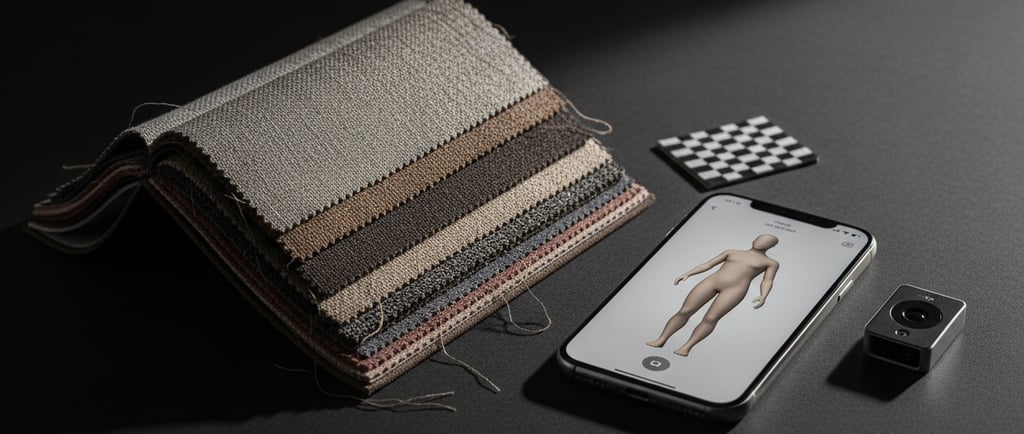
Platforms increasingly need to respect real-world sizing, body measurements, and garment dimensions—so outputs can be used for e-commerce without misleading customers.Material fidelity
High-end fashion is often about fabric: grain, drape, specular response, thickness, and how it behaves under light. Platforms compete by improving material cues and consistency across a collection.Pose and silhouette integrity
A brand’s look depends on posture, stance, and proportion. “A beautiful image” isn’t enough if the model’s body language changes randomly from frame to frame.Consistency across sets
E-commerce doesn’t need one perfect hero shot; it needs 30 consistent shots across SKUs. Realism includes the ability to maintain identity, camera, lighting, and background across a batch.
Realism is also a pipeline problem
Even the best generation model may need:
controlled input references
pose conditioning
background control
post-processing standards (color, grain, retouch style)
QA checks for artifacts
Platforms that package realism as an end-to-end pipeline—not just “type prompt → get image”—are better aligned with how fashion production actually works.
How platforms position themselves: three archetypes
On Jan 30, you can roughly group AI fashion model platforms into archetypes based on what they optimize:
Output-first platforms
Incredible visuals and fast iteration, but weaker on rights and safety infrastructure. These platforms are ideal for experimenting, but they pose a greater risk when it comes to larger campaigns.Governance-first platforms
Strong contracts, audit trails, approvals, and controls can sometimes compromise creative flexibility. These platforms are ideal for both enterprise and luxury sectors.Vertical fashion platforms
Focused on garment realism, fit, consistent sets, and fashion-specific workflows (line sheets, SKU consistency, and seasonal collections). Often the best blend when done well.
The market is moving toward vertical governance. Brands want both.
What to ask before you choose an AI fashion model platform
If you’re evaluating platforms (or building one), the differentiating questions map cleanly to the three pillars:
Rights questions
Can you document training and likeness permissions for the model identities you provide?
Can you issue licenses with territory/term/exclusivity?
Do you support model/version traceability for published assets?
Safety questions
What pre-generation restrictions exist (not just post-generation filtering)?
Can you enforce category restrictions per client?
Do you offer review workflows and audit logs?
Realism questions
Can you maintain identity and lighting consistency across a product set?
Do fabrics look correct under different lighting scenarios?
Can you control fit cues and prevent “impossible” garments?
The takeaway: the next winners won’t look like image generators
The AI modeling industry for fashion is maturing from “generation” to “production.” Rights, safety, and realism are not constraints that slow the business—they’re the features that unlock real budgets.
The platform that wins in 2026 won’t be the one that can generate a single viral image. It’ll be the one that can repeatedly deliver licensed, brand-safe, fashion-real assets at scale—while proving how those assets were created.
Luxury
Elevate your brand with our exclusive AI models.
Contact us
Exclusivity
© 2026. All rights reserved.
(609) 901-8073