How Small Brands Can Win Big With AI Models (Without a Huge Ad Budget)
1/3/20266 min read
For most small brands, the math behind traditional photo shoots has never really made sense.
By the time you have paid for:
Fees for models and agencies
Photographer, studio, and gear
Styling, hair, makeup, and retouching
For every channel, post-production, resizing, and cropping
You're already in the thousands of dollars, and you don't even know if the creative will work.
AI models turn that around.
Small brands can now make visuals on demand, try out different ideas, and only grow what works instead of spending a lot of money on a single shoot. When used correctly, AI models can be more than just a "cool tech toy" for your brand; they can also help it perform better.
This post breaks down four important plays:
How small brands can use AI models to compete without spending a lot of money
Why AI-generated images are better than stock photos in general
How to use AI to A/B test the look of your brand before a full campaign shoot
How to use AI models to make a lot of UGC-style content
1. Using AI models to compete with bigger brands
Big brands don't just win because they have better ideas; they win because they can make more variations, faster, and with better quality.
AI models make the playing field even.
What AI does for small brands:
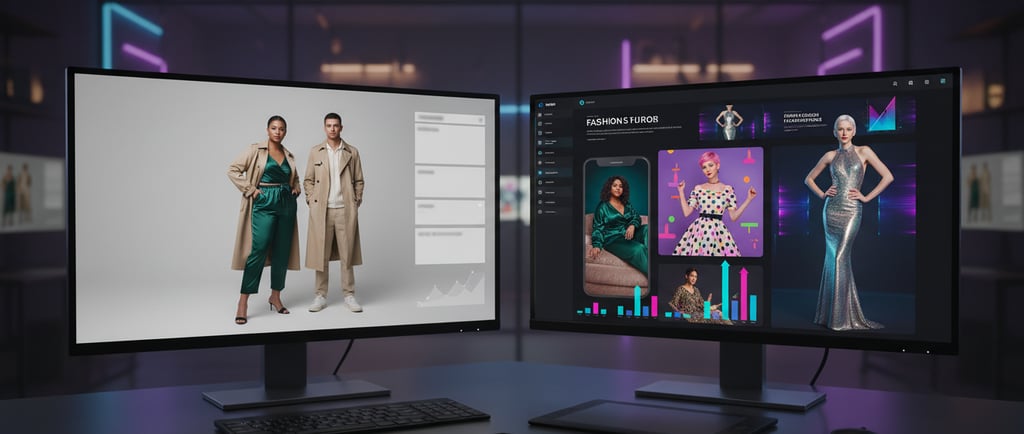
Casting on demand: Do you need a plus-size model, a retro-pink-haired look, and a futuristic couture feel in one campaign? You can do all three without having to deal with different agencies, schedules, or travel.
Speed: Get from idea to first draft creatives in hours, not weeks.
Cost control: You can make hundreds of pictures for the price of one traditional day in the studio instead of just one expensive shoot.
Agility: Be able to respond to trends, new product releases, or seasonal events almost right away.
That flexibility is a big advantage for a small brand. You can:
Start more small campaigns
Try out niche audiences
Make creatives more personal by region, interest, or style.
All of this without going over your budget.
2. High-Converting Ad Creatives: Why AI Models Are Better Than Stock Photos
Stock photos are quick and cheap, but they have hidden costs:
They don't look like your brand.
Your competitors might actually use the same picture.
They often seem stiff, staged, and boring.
When done right, AI models hit a whole different note.
Why AI creatives work better than stock:
Styling for a specific brand
You don't have to wear what the stock photographer picked out for you. You can change:
Attitude and pose
Color palette and lighting
Hair, makeup, and accessories
A bedroom, rooftop, club, gallery, or other setting that fits with your brand's world
Consistency across all touchpoints
You can see the same familiar AI faces:
On the product pages of your website
In ads on Facebook and TikTok
On email banners and landing pages
That familiarity makes people trust you and remember you, which is something that stocks rarely do.
Diversity that really fits your audience
You can choose to show: instead of "whatever's in stock,"
Body types that match your size range
Hair textures and skin tones that are like those of your real customers
Age groups that match the people who buy your products
You can change the color of the clothes, the background, the angle, and the crop of AI images. You don't have to stick with just one image file.
3. A/B testing brand looks with AI models before a full shoot
This is where AI becomes a strategic weapon instead of just a way to save time.
Most brands make big aesthetic choices based on guesswork:
"Should we go with less or more?"
"Does our customer like cozy loungewear or high-fashion looks more?"
"Do bright colors or muted neutrals work better for our audience?"
You can test these questions cheaply with AI models before you commit to a full production.
A simple way for small brands to test things
Set up 2–4 hypotheses
For example:
Look A: A plus-size model in soft, natural light, neutral colors, and comfy loungewear.
Look B: A model with pink hair and bright colors gives off a retro diner vibe.
Look C: High-fashion clothes made of metal with bright lights and geometric buildings.
Make creative sets for each look.
Make:
3 to 5 different versions of the ad (with different poses, crops, and copy layouts)
1–2 hero images for the landing page
A few social-first crops, like Story-friendly assets and Reels covers
Do A/B tests with control groups
Use the same audience and budget for all versions.
Make sure your offer and copy are the same so that the visual is the only thing that changes.
Run long enough to get statistically useful data (even a few hundred clicks per variant can be helpful).
Read the results.
Take a look at:
Click-through rate (CTR)
CPC, or cost per click
On-site actions (time spent on page, add-to-cart rate, scroll depth)
Set a visual direction
The winning style becomes the model for:
Your library of deeper AI content
Future live shoots (if you decide to do them)
Your brand rules for pictures
You're not arguing about "taste" anymore; you're making a decision based on performance.
4. The Ultimate Guide to AI Models for Making Lots of UGC-Style Content
User-generated content, or UGC, is all over today's feeds. It's all about "real people," lo-fi angles, bedroom mirrors, and selfie energy.
But small brands hit a wall:
Finding new creators all the time is hard
Not every creator can stay on-brand or on-brief.
The amount of content needs to keep going up.
AI models give you a hybrid solution: content that looks like user-generated content but is carefully planned.
What "AI UGC" really looks like
You're not making up real customer reviews; you're copying the way UGC looks:
Casual poses, like sitting on a bed, leaning against a door, or taking a selfie in the mirror
Naturalistic settings like apartments, cafes, sidewalks, and rooftops
Framing that isn't perfect (a little tilt, a blurry foreground, or lens flare)
Different outfits and styles in different posts
You put these pictures together with:
Real reviews from customers in the captions
Real information about the product and its benefits
Real brand voice
How to make a lot of AI UGC
Make a list of all your "characters."
For instance, you could have:
A plus-size woman in satin loungewear who is sure of herself (in bed, in the morning light, from a self-care angle)
A creative person with bright pink hair in a retro setting (nightlife, fun, expression angle)
A stylish, modern blonde with metallic looks (for evening and special occasions)
These become "characters" that your audience knows and loves, just like recurring creators.
Make templates for your content
Think in groups:
"Outfit of the Day" series "Get Ready with Me" style frames
"Studio" moments behind the scenes
Close-ups of fabrics, details, and jewelry with a hand or part of a face
Make changes in a planned way
For each character and template, change:
Pose and angle
Background area (doorway, window, bed, chair)
Accessories and color scheme
Time of day: morning, golden hour, or night
When tuned well, one prompt can easily make more than ten usable posts.
Meet the needs of the platform
Reels, TikTok, and Stories should be 9:16 vertical. Instagram feed should be 1:1 or 4:5.
16:9 for blog headers, YouTube thumbnails, or homepage heroes
Mix AI-generated content with real content
The most trustworthy brands don't use synthetic materials all the time. They:
When you can, share real customer content.
Use AI to fill in the blanks, keep things consistent, and try out new ideas.
Always tell the truth in your messages (no fake reviews or made-up experiences)
Putting It All Together for a Small Business
Here's a useful rollout plan for small brand owners or marketers:
Month 1: The Base
Choose two to three main "faces" for your AI that fit your target audience.
Create a starter library with 30 to 50 pictures of your most important looks.
Instead of using generic stock on your website, use AI creatives that fit your brand story.
Testing in Month 2
Set up A/B tests with different looks, like lighting, styling, and backgrounds.
Look at the AI creatives next to the pictures you already have in ads.
Start making AI UGC-style content for social media that isn't paid for.
Month 3—Scaling
Put more effort into the visual direction that works best.
Add more content to your bank, like seasonal looks, new products, and bundles.
If you want, plan a focused real-world shoot based on your proven AI ideas.
You don't have to guess where to spend your small production budget anymore. You use AI to find the best options first, and then you can scale up with confidence.
Where Noir Starr Comes In
Noir Starr's goal is to be a virtual creative studio for your brand:
AI models that have been carefully chosen to show real-world diversity
Not just generic renders, but styling and lighting at the editorial level
Visual systems made for testing: a lot of different styles, but one brand feel
You're not just buying random AI images; you're making a content engine that puts strategy first.
I can now do the following if you'd like:
You can make this into a blog draft for your site with a title tag, meta description, H2/H3 structure, and internal link prompts for noirstarrmodels.com.
Make captions for Instagram, TikTok, and LinkedIn that talk about these two pictures and the main idea: "AI models let small brands test and create better than bigger brands."
Luxury
Elevate your brand with our exclusive AI models.
Contact us
Exclusivity
© 2026. All rights reserved.
(609) 901-8073