Model Versioning Wars: Why Brands Now Ask for v1.3 vs v1.4
2/23/20264 min read
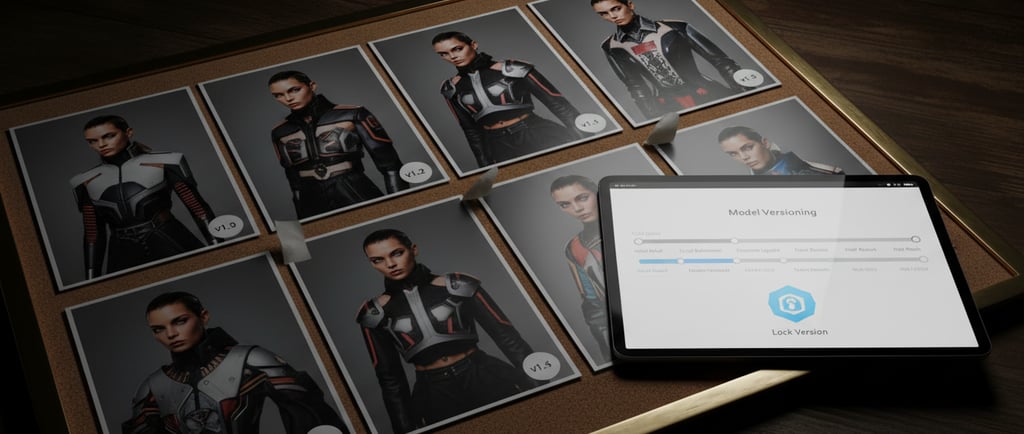
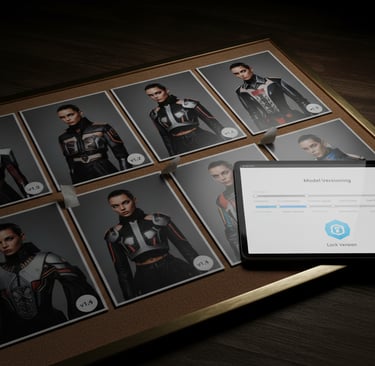
In the traditional modeling world, a model’s look changes slowly—a new haircut, a summer tan, the natural process of aging. But in the AI fashion model industry, a model’s face can change overnight because of a software update. On Feb 20, we are seeing the emergence of a new technical and commercial conflict: the Model Versioning Wars.
As AI platforms update their underlying foundation models (moving from version 1.3 to 1.4, for example), the "weights" that define a specific digital twin can shift. A jawline might become slightly sharper; skin texture might become more porous; the way light hits the eyes might change. For a global fashion brand running a year-long campaign, these "micro-shifts" are a disaster. They break visual consistency, confuse consumers, and dilute brand identity.
This update explores why version locking is becoming a mandatory feature for luxury brands, how "release notes" for AI models are becoming a creative tool, and why the ability to maintain a "legacy version" of a digital twin is the new competitive moat for agencies and platforms.
The Consistency Crisis: When "Better" is the Enemy of "Same"
The AI model industry is obsessed with "better." Every new iteration of a model promises higher resolution, more realistic fabric physics, and better hand rendering. But in fashion, consistency is more valuable than incremental improvement.
Imagine a brand like Noir Starr launching a seasonal collection. They use an AI model (let's call her "Aria v1.2") for the initial lookbook. Two months later, they need to generate additional social media assets and localized ads for the Asian market. If the platform has automatically updated to "Aria v1.4," the model might look better, but she won't look like the same person from the lookbook.
This "identity drift" is the primary reason brands are now demanding version-locked environments. They don't want the latest and greatest; they want the version they approved three months ago.
"Release Notes" for Faces: The New Creative Brief
On Feb 20, we are seeing creative directors treat AI model updates like software patches. A typical "Model Release Note" in a high-end agency might look like this:
Aria v1.3 Update:
Improved specular response on silk and satin fabrics.
Refined iris detail for extreme close-ups.
Fixed "floating collar" glitch in seated poses.
Warning: Slight shift in cheekbone shadow density; may require lighting adjustment in existing scenes.
Creative teams are now making strategic decisions: "Do we migrate the campaign to v1.3 for the better fabric rendering, or do we stay on v1.2 to ensure the face remains identical to the print ads?" This is a level of technical-creative crossover that didn't exist six months ago.
The "Legacy Lock": Why Agencies are Hoarding Old Weights
As platforms push users toward their newest, most efficient models, a secondary market is forming for Legacy Weights. Agencies that have the technical infrastructure to host and run older versions of AI models have a massive advantage.
If a brand signed a three-year contract for a specific digital twin, they need that twin to remain identical for the duration of the contract. If the platform "retires" the underlying model, the agency must be able to provide a "Legacy Lock" service. This involves:
Dedicated Compute: Running older, less efficient code to maintain the specific look.
Weight Archiving: Securely storing the exact state of the model at the time of approval.
Regression Testing: Ensuring that new prompts in the old model still produce the expected results.
This is turning AI modeling agencies into digital archivists. They aren't just booking talent; they are maintaining the "source code" of a brand's visual identity.
The Commercial Impact: Versioning as a Pricing Tier
We are seeing a shift in how AI modeling is priced. "Standard" access might give you the latest version of a model, but "Enterprise" or "Luxury" tiers include:
Version Pinning: The ability to lock a model version for 12-24 months.
Migration Support: Technical help to move a digital twin from an old version to a new one while minimizing identity drift.
Custom Fine-Tuning: Creating a private "v1.x" branch specifically for one brand's aesthetic.
For a platform, the ability to manage these versions without breaking the user experience is a massive engineering challenge. For a brand, it's the difference between a professional campaign and a "glitchy" AI experiment.
The Future: "Identity-Preserving" Updates
The holy grail of the AI model industry is an update that improves everything (fabric, lighting, resolution) while keeping the identity (the specific geometry of the face) 100% identical. We aren't there yet, but the "Versioning Wars" of Feb 20 are pushing developers to create Identity-Locked Adapters.
These are modular layers that sit on top of any foundation model, "forcing" the identity to remain constant even as the world around it changes. Until those are perfect, the industry will continue to fight over v1.3 vs v1.4.
Conclusion: The New Standard of Professionalism
On Feb 20, the mark of a professional AI modeling operation is no longer just the quality of the images—it's the rigor of the versioning. Brands that want to lead in the synthetic era must treat their AI models like software: versioned, documented, and locked for stability.
In the "New Talent Economy," the most successful models won't just be the most beautiful; they'll be the ones whose "v1.2" looks exactly like their "v1.2" a year from now.
Luxury
Elevate your brand with our exclusive AI models.
Contact us
Exclusivity
© 2026. All rights reserved.
(609) 901-8073