
Smart Fabrics & Generative Wearables
When AI Moves from the Screen to the Stitch
Anthony Starr
4/1/20264 min read
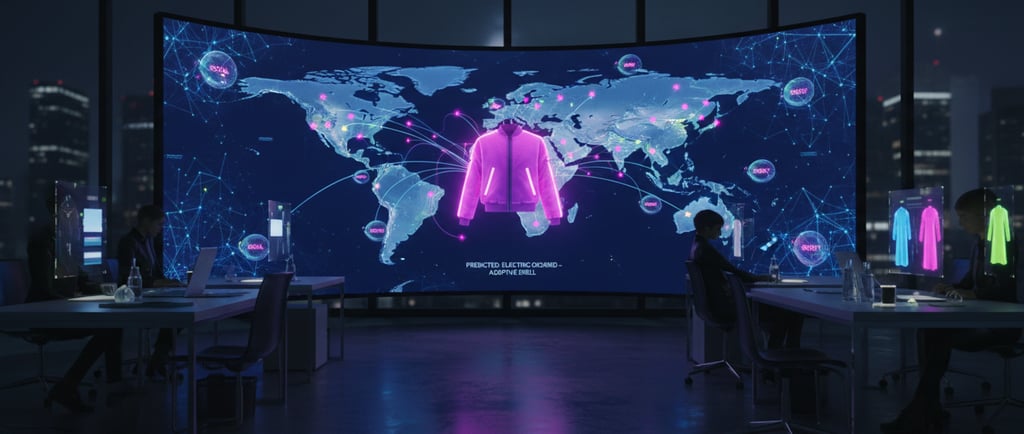
For the past few years, the conversation around AI in fashion has been largely digital. We’ve talked about AI-generated models, virtual fitting rooms, and algorithmic trend forecasting. But in 2026, the technology is making a leap from the screen to the physical world. We are entering the era of "Generative Wearables"—garments that don't just look smart but are embedded with AI-driven "Smart Fabrics" that can change, adapt, and respond to their environment in real-time.
This is the ultimate convergence of fashion-tech and neural networks. It is a world where your clothes are no longer static objects but dynamic interfaces that can express your mood, monitor your health, and even "redesign" themselves on the fly.
The Rise of "Chameleon Textiles"
The most visually stunning application of AI in smart fabrics is the development of "Chameleon Textiles." These are fabrics embedded with micro-LEDs or color-changing polymers that are controlled by an onboard AI processor.
Imagine a jacket that can change its color and pattern based on a simple voice prompt or a "mood" detected by your smartwatch. "I’m feeling energetic today," you say, and your neutral grey blazer instantly shifts into a vibrant, pulsing "Electric Orchid" pattern. Or, more practically, your workout gear could change color to indicate when you’ve reached your target heart rate. This "Generative Aesthetic" allows a single garment to replace an entire wardrobe of colors and prints, making fashion both more expressive and more sustainable.
Biometric Feedback: The "Second Skin"
Beyond aesthetics, AI-embedded fabrics are becoming a "second skin" that monitors our physical and emotional well-being. Using conductive threads and flexible sensors, these "Biometric Garments" can track everything from heart rate and respiration to stress levels and posture.
The AI doesn't just collect this data; it interprets it. If the sensors detect that your stress levels are spiking during a meeting, the fabric could subtly adjust its temperature to cool you down or even emit a calming, microencapsulated scent. For athletes, these garments provide real-time feedback on muscle engagement and form, helping to prevent injury and optimize performance. This is "Wellness Fashion"—where the clothes we wear are actively working to make us feel better.
Generative Draping and "Shape-Shifting" Silhouettes
The most futuristic frontier of smart fabrics is "Shape-Shifting" technology. By using "Shape Memory Alloys" (SMAs) and AI-controlled actuators, a garment can actually change its silhouette.
A trench coat could automatically shorten its hemline and tighten its cuffs when the AI detects a sudden rainstorm, or a dress could "drape" itself differently based on the formalness of the event you are attending. This "Generative Draping" allows for a level of versatility that was previously impossible. A single "base" garment can be transformed into dozens of different looks, all controlled by an AI that understands the context of your day.
The "Internet of Outfits": Connected Fashion
In 2026, our clothes are becoming part of the "Internet of Things" (IoT). Smart fabrics are being embedded with NFC (Near Field Communication) tags and AI-driven "Digital Passports."
When you tap your phone to your sleeve, you can see the entire history of the garment: where the cotton was grown, who sewed it, and how many times it has been worn. More importantly, these "Connected Outfits" can communicate with each other. Your shoes can tell your pants which color to turn to match perfectly, or your jacket can "check in" to a digital event, automatically sharing your social media profile with other attendees. This is "Social Fashion"—where the clothes we wear are the ultimate networking tool.
The Sustainability Argument: "One Garment, Infinite Looks"
The environmental impact of smart fabrics is potentially revolutionary. The fashion industry’s biggest problem is overconsumption—the constant need for "new" looks. If a single AI-powered garment can change its color, pattern, and silhouette, the need to buy multiple items is drastically reduced.
Furthermore, these fabrics are being designed for "circularity." Many smart textiles are now being made from bio-synthetic materials that are fully recyclable, with the electronic components designed to be easily removed and reused. By moving from "disposable fashion" to "durable, dynamic fashion," AI is helping to create a truly sustainable industry.
Conclusion: The Future is Reactive
The era of "dumb" clothes is coming to an end. As AI moves from the screen to the stitch, our relationship with fashion will be fundamentally transformed. We will no longer just "wear" clothes; we will "interact" with them.
The brands that win in 2026 will be those that can seamlessly integrate high-end design with cutting-edge AI technology, creating garments that are as intelligent as they are beautiful. The future of fashion is reactive, personalized, and infinitely generative.
Frequently Asked Questions
Are smart fabrics safe to wear? Yes. The electronic components in modern smart fabrics are incredibly small, flexible, and shielded to ensure they are safe for long-term contact with the skin. They are also designed to be "washable," with the AI processors and batteries often being removable or fully waterproofed.
How do I "charge" my clothes? Most generative wearables use a combination of "Kinetic Charging" (generating power from your movement) and "Wireless Charging" (similar to how you charge a smartphone). Some advanced fabrics are even being developed with "Solar Threads" that can harvest energy from ambient light.
Will smart fabrics be affordable? Initially, these technologies will be reserved for high-end luxury and performance brands. However, as the manufacturing of conductive threads and microprocessors scales, we expect to see "Smart Basics" entering the mass market by 2028.
Luxury
Elevate your brand with our exclusive AI models.
Contact us
Exclusivity
© 2026. All rights reserved.
(609) 901-8073