Synthetic Exclusivity: Category Locks, Region Locks, and the New Pricing of Virtual Talent
2/25/20263 min read
In the traditional modeling world, exclusivity is one of the most expensive line items in a contract. If a luxury house wants a face to be "theirs" for a season, they pay a massive premium to ensure that model doesn't show up in a competitor's campaign. On Feb 20, the AI fashion model industry is officially porting this concept into code. We are seeing the rise of Synthetic Exclusivity—where "non-compete" clauses are no longer just legal threats, but software-enforced features.
As brands move from one-off AI experiments to long-term virtual brand ambassadors, the need to "lock" a digital twin is becoming a primary driver of platform pricing. This update explores how Category Locks and Region Locks are being built into AI model weights, and how this is redefining the value of virtual talent in the new economy.
The "Category Lock": Preventing the Cross-Brand Glitch
One of the biggest fears for a high-end brand using an AI model is "identity dilution." If a luxury brand uses a specific digital twin for a couture campaign, and a week later that same face appears in a fast-fashion ad or a discount beauty promotion, the luxury brand’s investment is instantly devalued.
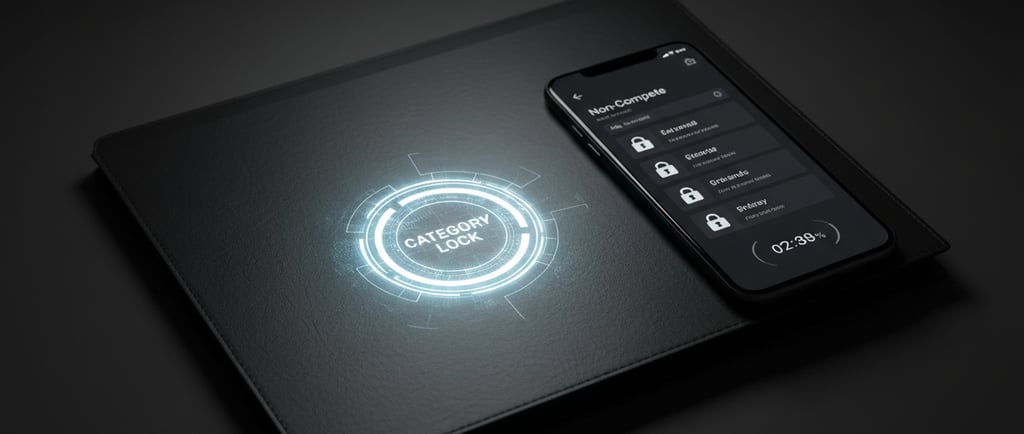
On Feb 20, leading AI modeling platforms are introducing Category Locks. This is a technical restriction tied to a model’s unique ID (or "weights"). When a brand licenses a digital twin, they can purchase a "Lock" on specific industry categories:
Luxury/Couture
Beauty/Cosmetics
Streetwear/Athleisure
Fast Fashion
If a competitor in a locked category tries to generate assets using that same digital twin, the platform’s API will simply return an "Access Denied" or "Exclusivity Conflict" error. This turns a "gentleman's agreement" into a hard technical barrier.
"Region Locks": The Geography of Virtual Presence
In the physical world, a model can only be in one place at a time. In the AI model industry, a digital twin can be everywhere at once. This creates a unique problem for global brands that want to maintain different "faces" for different markets.
Region Locking allows a brand to own a digital twin’s likeness exclusively in a specific territory—say, North America or the EU—while allowing the agency to license that same twin to a non-competing brand in Asia.
This is managed through Geofenced Generation. The platform tracks the IP address or the billing entity of the user. If a brand in Paris tries to use a model that is currently "Region Locked" to a brand in New York, the system blocks the export of high-resolution assets. This allows agencies to maximize the "yield" of a single digital twin by slicing its availability geographically.
The New Pricing Tiers: Paying for the "Lock"
The introduction of these technical locks is fundamentally changing how AI models are priced. We are moving away from "pay-per-image" and toward "pay-per-protection."
On Feb 20, a typical pricing structure in the AI modeling industry looks like this:
Standard License: Non-exclusive use of a high-quality AI model. The face may appear in other non-competing campaigns.
Category Exclusive: A 2x-3x premium to ensure the model doesn't appear in your specific industry (e.g., "No other skincare brands").
Full Global Lock: A 10x-20x premium for "Total Identity Ownership," where the model is effectively taken off the market for the duration of the contract.
For agencies like Noir Starr, this creates a new revenue stream: Exclusivity Management. Agencies are now responsible for monitoring these digital locks and ensuring that their "roster" of virtual talent isn't over-saturated or conflicted.
The "Non-Compete" as a Software Feature
The most advanced platforms are now offering Automated Non-Compete Dashboards. A brand manager can log in and see exactly which categories and regions are currently "locked" for their chosen digital twin, with a real-time countdown until those rights expire.
This transparency is a massive selling point for luxury brands that are traditionally wary of the "wild west" nature of AI. By seeing the "Lock" in the software, they feel the same level of security they would get from a 50-page legal contract with a top-tier human modeling agency.
The Ethical and Legal Frontier: Who Owns the "Lock"?
As of Feb 20, the industry is still debating a critical question: Can you "lock" a face that doesn't exist?
If an AI model is purely synthetic (not based on a real person), the "rights" are purely contractual between the platform and the brand. But if the AI model is a Digital Twin of a real human, the "Lock" must be authorized by that human. This is leading to complex "Tri-Party Agreements" between the Model, the Agency, and the Platform, all mediated by the "Likeness Ledger" technology we discussed in previous updates.
Conclusion: Exclusivity is the New Realism
In the early days of AI fashion, the goal was to make the models look real. Now that realism is a solved problem, the goal is to make the models exclusive.
On Feb 20, the "Model-as-a-Service" economy is proving that the most valuable AI models aren't just the ones that look the best—they are the ones that are the most controllable. For a brand, a "Category Lock" is more than just a feature; it's the digital equivalent of a velvet rope, ensuring that their virtual ambassador remains as elite and untouchable as the clothes they wear.
Luxury
Elevate your brand with our exclusive AI models.
Contact us
Exclusivity
© 2026. All rights reserved.
(609) 901-8073