The AI Stylist: Building a Personalized "Concierge" That Sells
3/20/20264 min read
In the golden age of retail, the "personal stylist" was a luxury reserved for the elite. You walked into a high-end boutique, and a professional who knew your taste, your wardrobe, and your upcoming social calendar would curate a selection of garments just for you. It was the ultimate "high-touch" experience, and it drove massive brand loyalty and high average order values.
As fashion moved online, that personal touch was lost. We replaced the stylist with the "search bar" and the "filter." But in 2026, the pendulum is swinging back. AI-powered styling assistants—driven by Large Language Models (LLMs) and sophisticated recommendation engines—are bringing the "concierge" experience to every smartphone on the planet.
From "Search" to "Conversation"
The biggest shift in fashion e-commerce is the move from "keyword search" to "conversational commerce." Instead of typing "blue floral dress" into a search bar and getting 500 irrelevant results, a customer can now have a dialogue with an AI stylist.
"I’m going to a wedding in Tuscany in July. I want something breathable but elegant, and I’d like to wear gold accessories I already own."
The AI doesn't just find a dress; it understands the context. It knows that "Tuscany in July" means high heat and a specific "rustic-chic" aesthetic. It can suggest linen or silk blends, recommend a specific color palette that complements gold, and even "bundle" the look with shoes and a bag from the brand’s current collection. This isn't just a chatbot; it’s a "sales associate" that never sleeps and has perfect memory of every item in the warehouse.
The Power of the "Virtual Wardrobe"
The most advanced AI stylists are those that integrate with a user’s existing wardrobe. By allowing customers to upload photos of their favorite clothes, brands can offer "outfit completion" services.
"You bought those black leather boots from us last season. Here are three new skirts from our Spring collection that would look incredible with them."
This "closet-first" approach changes the relationship between the brand and the consumer. The brand is no longer just trying to sell a single item; it is helping the customer "build a look." This leads to higher "basket sizes" (as customers buy the coordinating pieces) and lower return rates (as the customer already knows how the new item fits into their life).
Hyper-Personalization: The "Segment of One"
In the old world of marketing, brands divided their customers into broad "segments"—e.g., "Women, 25-34, interested in sustainability." AI allows for a "segment of one."
An AI stylist can analyze a user’s browsing history, past purchases, and even their social media "likes" to build a deep psychological profile of their style. Does this customer prefer "quiet luxury" or "maximalist streetwear"? Do they always return items that are "too tight" in the waist? The AI uses this data to curate a "Personal Shop" that is unique to every visitor. When a customer feels "seen" and "understood" by a brand, their loyalty becomes nearly impossible to break.
The "Stylist" as a Data Engine for Design
The benefits of an AI stylist aren't just on the front-end. The data generated by these conversations is a goldmine for the design and buying teams.
If 5,000 customers ask the AI stylist for "a waterproof trench coat that doesn't look like a raincoat," and the brand doesn't have one, that is a clear signal for the next design cycle. AI stylists provide "unfiltered" customer feedback at scale, allowing brands to move from "guessing" what people want to "knowing" what they are searching for.
The "Human-in-the-Loop" Model
While the AI handles the high-volume, everyday styling requests, the most successful luxury brands are using a "hybrid" model. The AI does the initial curation, and then a human stylist "approves" or "refines" the final selection for VIP customers. This "AI-augmented" human styling allows a single professional to manage 10x more clients without losing the "soul" and "intuition" that only a human can provide.
The Future: The "Always-On" Style Companion
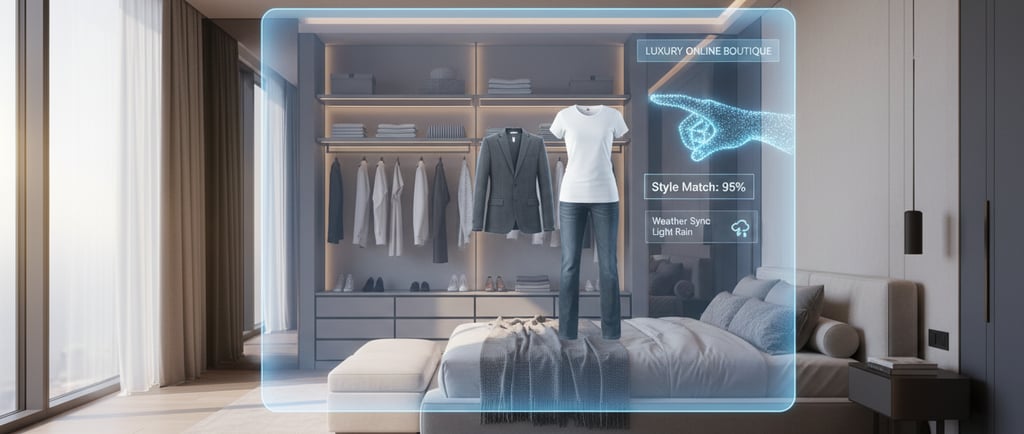
We are moving toward a world where your AI stylist isn't just on a website; it’s in your smart mirror, your AR glasses, and your daily notifications.
"Good morning! It’s going to be rainy today, so I’ve laid out your waterproof boots and that new trench coat. You have a big presentation at 2 PM, so I’ve added the silk scarf for a touch of authority."
This is the ultimate goal of fashion AI: to move from "selling clothes" to "managing a lifestyle." The brands that build the best "stylist" won't just win the transaction; they will win the "mindshare" of the consumer every single morning.
Frequently Asked Questions
Is an AI stylist better than a human one? AI is better at "scale" and "data retrieval"—it can remember every item in a 10,000-piece catalog instantly. However, humans are still better at "emotional intelligence" and "cultural nuance." The best results come from a combination of both.
How do I "train" my AI stylist? Most AI stylists learn through "feedback loops." When you "like" a recommendation or "buy" a suggested outfit, the AI records that as a success. When you "skip" an item, it learns what to avoid. The more you interact with it, the more "you" it becomes.
Does this work for budget brands? Absolutely. In fact, AI styling is even more transformative for "mass-market" brands where human styling was previously too expensive to offer. It allows a $20-per-shirt brand to offer a "luxury-level" service to every customer.
Luxury
Elevate your brand with our exclusive AI models.
Contact us
Exclusivity
© 2026. All rights reserved.
(609) 901-8073