
The Fashion Technology Evolution
Industrial Revolution Fashion, AI Garment Construction, Future of Fashion Production.
4/20/20262 min read
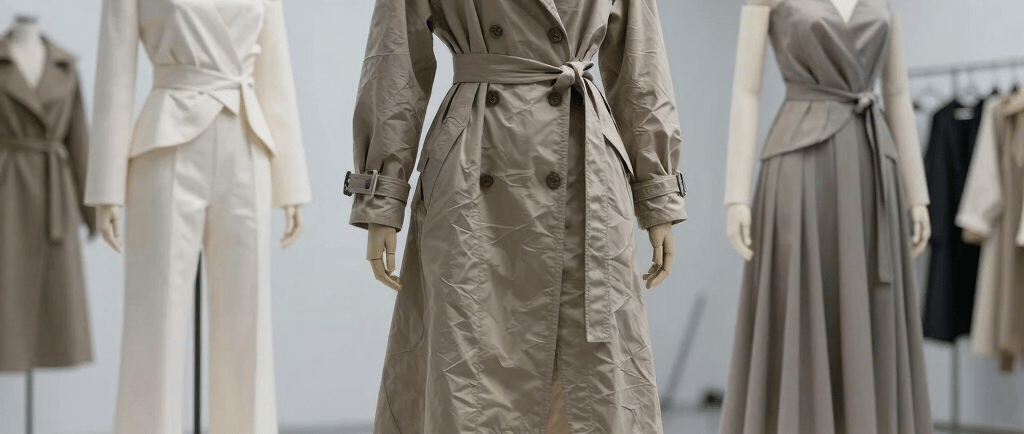
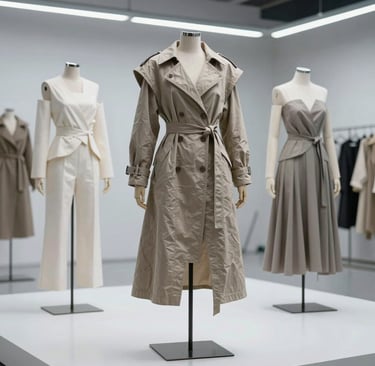
Just as the Industrial Revolution transformed hand-sewn garments into mass-produced apparel, you now stand at the edge of another seismic shift. AI-driven design and automated garment construction are reshaping how clothes are made, reducing waste and speeding time to market. While overproduction risks remain high, smart factories and on-demand manufacturing offer a more sustainable, precise future for fashion production.
The Mechanical Inflection: Steam and the Social Fabric
You felt the tremor of steam-powered looms shaking the foundations of traditional dressmaking. Entire communities reorganized around factory shifts, pulling women and children into industrial labor under dangerous, soot-choked conditions. Your wardrobe changed not by choice, but by mass production’s relentless pace. Clothing became standardized, accessible, and detached from craft, altering class signals woven into fabric for centuries.
The Algorithmic Weaver: Logic as the New Loom
You now stand at the loom of logic, where code stitches fabric in silent factories. Algorithms design garments with precision no human hand can match, optimizing every thread for fit, function, and sustainability. This shift risks erasing artisanal knowledge, replacing intuition with data, yet unlocks unprecedented speed and customization. Your choices shape whether this logic weaves liberation or loss.
Precision at Scale: The Robotic Atelier
You now operate within a new era where robotic arms stitch complex patterns with micron-level accuracy, replicating haute couture techniques at industrial speed. Machines learn your preferred fits and fabric behaviors, enabling mass customization without waste. Each garment is built with consistent precision, eliminating human error while scaling personalization. This is not automation replacing artistry-it’s technology amplifying your creative control across thousands of units.
The Efficiency Mandate: Logic Over Waste
You operate in a system where every scrap of fabric and second of labor carries cost and consequence. Waste is no longer an acceptable byproduct-it’s a design flaw. Algorithms now calculate optimal pattern layouts, reducing material loss by up to 30%. Machines learn from each cut, refining processes in real time. You’re not just making clothes faster; you’re building a production logic that rejects excess by default.
The Virtual Mirror: Digital Twins and the Self
You now see yourself not just in glass, but in data. Digital twins of your body allow perfect garment simulations, reducing returns and waste. Every curve, posture, and movement is mirrored in real time, letting you test designs before they exist physically. This hyper-personalization blurs identity and interface, turning fashion into an extension of digital self-expression. Your reflection evolves-alive, adaptive, and constantly learning.
The Biological Pivot: Growing the Future
You’re no longer limited to weaving fabric from threads-now you grow it. Living organisms like mycelium and bacteria are being engineered to produce biodegradable textiles in controlled environments, slashing waste and carbon emissions. This shift means garments could originate from labs, not looms, transforming how you think about material origins. With biology as your manufacturing base, fashion gains a regenerative path forward. You’re not just reducing harm-you’re building a system where clothing gives back.
Conclusion
With these considerations, you see how industrial revolution innovations laid the foundation for mechanized textile production, enabling mass fashion. Today, AI garment construction reshapes precision and efficiency in design. You now stand at the edge of a new era, where technology redefines how garments are made, distributed, and experienced in everyday life.
Luxury
Elevate your brand with our exclusive AI models.
Contact us
Exclusivity
© 2026. All rights reserved.
(609) 901-8073