
The “Neural Tailor”: AI‑Driven Alterations and the End of Mass Production
2/16/20263 min read
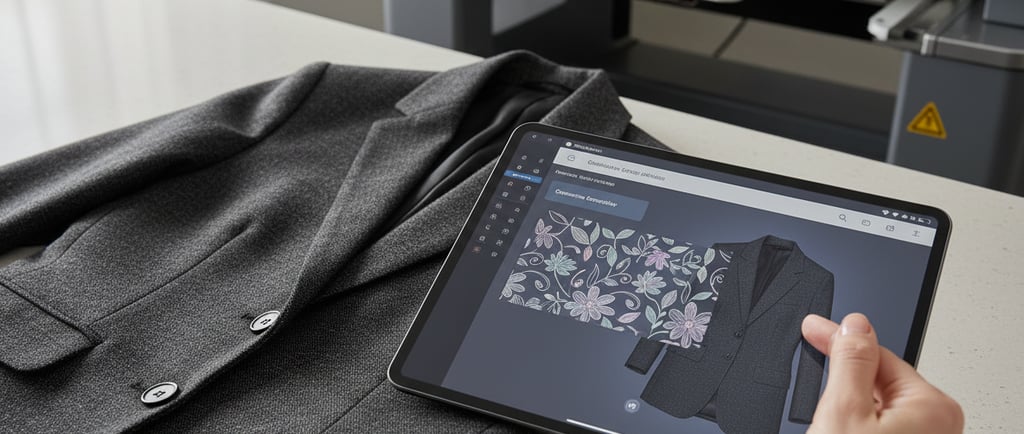
For over a century, the fashion industry has been built on the compromise of "Ready-to-Wear." We accepted that clothes would be made for a statistical average, and if a sleeve was too long or a waist too loose, that was simply the price of convenience. High-end tailoring—the "Bespoke" experience—remained a luxury reserved for those with the time and budget for multiple in-person fittings.
In 2026, that compromise is dissolving. The rise of the Neural Tailor—a combination of high-precision 3D body scanning, generative design, and automated manufacturing—is bringing the bespoke experience to the Direct-to-Consumer (DTC) price point. We are moving from a world of "Mass Production" to one of "Mass Customization," where every garment is digitally mapped to the individual before a single stitch is sewn.
Digital Fit Mapping: The 3D Blueprint
The foundation of the Neural Tailor is the Digital Fit Map. Using the same smartphone sensors that power facial recognition, customers can now perform a medical-grade 3D body scan in their own living room. This scan captures thousands of data points—not just height and weight, but shoulder slope, posture, limb proportion, and muscle distribution.
The AI then takes the "Master Pattern" of a garment—say, a Noir Starr signature blazer—and performs a Neural Alteration. It doesn't just scale the pattern up or down; it reshapes it. If the AI detects a slightly rounded shoulder or a shorter torso, it adjusts the digital pattern lines in real-time. This creates a unique 3D blueprint that is perfectly calibrated to the user’s physical reality.
Generative Customization: Co‑Designing the Details
Beyond fit, the Neural Tailor allows for Generative Customization. This is where the customer moves from "buyer" to "co-designer." Through an intuitive interface, users can apply AI-generated elements to standard silhouettes:
Generative Embroidery: A user can describe a vibe—"minimalist botanical" or "geometric deco"—and the AI generates a unique embroidery pattern that is then digitally mapped to the garment’s panels.
Placement Logic: The AI ensures that prints or embroideries are placed perfectly according to the garment’s seams and the wearer’s proportions, avoiding awkward cut-offs.
Hardware & Trim: Customers can swap buttons, linings, and pocket styles, with the AI providing a real-time 3D preview of how these changes affect the overall aesthetic.
This level of personalization ensures that no two garments are exactly alike, turning every purchase into a "1-of-1" piece.
The "Perfect Fit" Guarantee: Eliminating the Final Barrier
The biggest hurdle for high-end online fashion—suits, evening wear, and structured tailoring—has always been the fear of a bad fit. The Neural Tailor eliminates this risk. By providing a "Perfect Fit Guarantee" backed by AI data, brands can offer bespoke-level accuracy without the need for a physical tailor.
If a garment arrives and requires a minor adjustment, the customer can use the app to "flag" the area. The AI analyzes a photo of the wearer in the garment, identifies the tension points, and updates the user's Digital Fit Map for all future orders. This creates a self-learning feedback loop: the more you shop with a brand, the more perfect the fit becomes.
Robotic and Human Collaboration: The New Atelier
The Neural Tailor isn't just software; it’s a new way of making. In the modern atelier, AI-driven cutting machines use the unique digital patterns to minimize fabric waste, while robotic arms handle the repetitive, high-precision stitching.
However, the "Human-in-the-Loop" remains essential. Master tailors use the AI’s data to focus on the artistry—the hand-finishing, the delicate lapel rolls, and the final quality check. The AI handles the math, while the human handles the soul of the garment. This hybrid model allows brands to produce custom garments at a speed and price point that was previously impossible.
Sustainability Through Zero Inventory
The most profound impact of the Neural Tailor is on sustainability. Traditional fashion relies on "Predictive Inventory"—making thousands of items in advance and hoping they sell. This leads to massive overproduction and eventual landfill waste.
The Neural Tailor enables On-Demand Manufacturing. Because the garment is customized to the individual, it isn't made until it is ordered. There is no "dead stock," no end-of-season markdowns, and significantly less fabric waste because patterns are nested perfectly by AI. It is a leaner, cleaner, and more ethical way to produce fashion.
Conclusion: The Return to Personal Craft
In many ways, the Neural Tailor is a return to the roots of fashion—a time when clothes were made specifically for the person wearing them. The difference is that technology has now made that level of care accessible to everyone.
In 2026, the "standard size" is becoming an anomaly. The brands that lead the market will be those that stop asking customers to fit into their clothes and start making clothes that fit their customers. The Neural Tailor is the ultimate expression of luxury: a garment that is as unique as the person wearing it, delivered with the precision of an algorithm and the heart of a craftsman.
Luxury
Elevate your brand with our exclusive AI models.
Contact us
Exclusivity
© 2026. All rights reserved.
(609) 901-8073