
The Rise of AI Supermodels
How Digital Talent Is Replacing Traditional Influencers
Anthony Starr
4/17/20265 min read
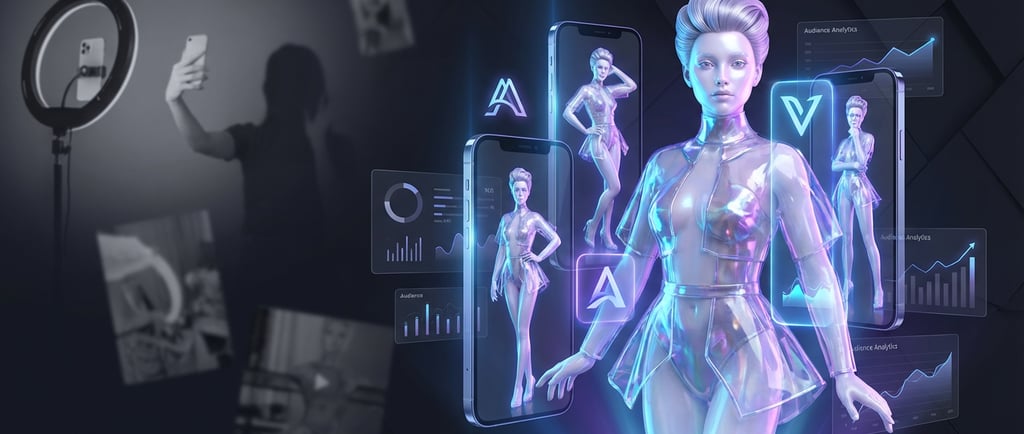
With hyper-realistic digital avatars now commanding millions of followers and top fashion deals, you’re witnessing a shift in influence. These AI supermodels never age, require no travel, and deliver consistent branding-qualities reshaping marketing. You’re no longer just following humans; algorithms now define aspiration, beauty, and trendsetting in the digital age.
The Genesis of the Pixelated Muse
Digital avatars once lived only in sci-fi fantasies, but now they walk runways, front campaigns, and command millions of followers. You’ve likely already seen them-flawless skin, impossible proportions, eyes that seem to follow you across the screen. These pixel-born influencers aren’t just animations; they represent a shift in how beauty, identity, and persuasion are constructed in the attention economy.
Engineering Perfection in Silicon
Perfection is no longer aspirational-it’s programmable. You can design a face with mathematically balanced symmetry, skin without blemishes, and expressions calibrated for maximum emotional impact. These models never age, tire, or deviate from brand guidelines, offering advertisers a level of control human influencers can’t match.
The Cost of Human Fragility
Human influencers bring authenticity, but that comes with risk. You never know when a personal scandal, controversial opinion, or simple fatigue might derail a campaign. Brands face unpredictable fallout when real lives intersect with public personas, making digital alternatives increasingly appealing for long-term stability.
When a celebrity influencer cancels a shoot due to illness or a social media misstep triggers backlash, the financial and reputational damage can be immediate. You’re not just paying for their reach-you’re absorbing the volatility of their humanity. Digital models eliminate that exposure. They don’t get sick, argue online, or demand last-minute changes. Their behavior is predictable, their image immutable. For global brands prioritizing consistency and risk mitigation, this reliability isn’t just convenient-it’s transformative. You’re not losing authenticity; you’re redefining it on terms that align with modern marketing demands.
The Economic Pivot of Virtual Influence
You’re already seeing how digital avatars outperform human influencers in cost-efficiency and brand alignment. Unlike traditional talent, AI supermodels don’t demand appearance fees, travel budgets, or downtime. Brands now allocate resources once-to design and deploy a virtual personality-and reap endless content cycles without contractual complications or public relations risks.
Eliminating the Logistics of Reality
You no longer need to coordinate time zones, wardrobes, or health disclosures. Virtual influencers never miss a shoot, fall ill, or require accommodations. Every campaign runs on schedule because the model exists in code, not flesh, freeing your team from the unpredictability of human variables.
Scalability of the Non-Existent
You can deploy a single AI model across ten markets simultaneously, each version speaking a local language and wearing region-specific fashion. There’s no fatigue, no scheduling conflicts-just infinite availability tailored to audience demand in real time.
One digital face can headline a Tokyo launch at dawn, walk a Parisian digital runway by noon, and star in a New York campaign by evening-all without movement or delay. Since the model has no physical form, you’re not limited by location, availability, or biology. This allows brands to maintain constant presence across platforms and geographies with minimal overhead, turning influence into a truly 24/7 revenue engine.
The Psychology of the Uncanny Valley
You feel it before you recognize it-a subtle discomfort when a digital face blinks just a fraction too late, or a smile lingers without reaching the eyes. These near-human imperfections trigger a primal unease, rooted in evolutionary psychology. As AI supermodels grow more lifelike, they edge closer to this uncanny valley, where realism breeds discomfort instead of connection. Your brain detects the absence of genuine emotion, even if your conscious mind can’t name it.
Parasocial Relationships with Code
You form emotional attachments to AI influencers as if they were real, sharing daily routines and personal milestones with digital beings who cannot reciprocate. These one-sided bonds thrive on curated perfection, offering companionship without conflict. The code behind them learns your preferences, reinforcing the illusion of intimacy with every interaction.
The Illusion of Relatability
You believe AI supermodels understand your struggles because their stories mirror your life-failed diets, bad dates, self-doubt-yet every vulnerability is algorithmically generated. Their “authentic” moments are engineered to resonate, not revealed. This manufactured relatability feels real because it reflects your emotions back at you, polished and problem-free.
Relatability in digital influencers isn’t accidental-it’s reverse-engineered from millions of data points about your behavior, desires, and insecurities. These models share “imperfections” that align precisely with cultural trends, making their flaws feel familiar. You see yourself in them not because they’re human, but because they’ve been designed to reflect an idealized version of you-one that never contradicts, disappoints, or ages.
Ethical Erosion in the Digital Age
You’re already aware that digital avatars can work 24/7 without pay, rest, or rights-this shift isn’t just changing marketing, it’s unraveling long-standing ethical norms in creative industries. As brands favor AI-generated faces over human influencers, accountability fades, and transparency becomes optional. There’s no consent needed when an algorithm designs a face, no credit given when beauty is synthesized from data.
Displacement of Human Labor
You see real photographers, stylists, and models losing contracts to self-updating digital personas. These AI supermodels don’t need teams, reducing entire creative ecosystems to background noise. When brands cut costs by replacing human talent with code, the ripple effect empties pockets and sidelines skilled professionals overnight.
Beauty Standards in an Algorithmic World
You’re being sold perfection that doesn’t exist-flawless skin, symmetrical features, and bodies shaped by data, not genetics. These AI-generated ideals are engineered for engagement, not authenticity. What you see isn’t aspirational; it’s optimized, and that optimization warps your sense of what beauty should be.
Algorithm-driven beauty standards are built from aggregated preferences, reinforcing narrow, homogenized looks that dominate feeds. You absorb these images without knowing they’re designed to trigger emotional responses, not reflect diversity. Over time, this distorts self-perception, especially among younger audiences who equate digital perfection with real worth. The danger isn’t just in what’s shown-it’s in what’s erased.
The Future of the Synthetic Celebrity
You’re already seeing digital avatars headline global campaigns, but this is just the beginning. Tomorrow’s synthetic stars won’t just pose-they’ll evolve, learn, and interact in real time, blurring the line between programmed persona and autonomous identity. These AI-driven figures will shape culture, set trends, and command influence without ever stepping off the server.
Integration with Generative Narratives
You’ll watch as synthetic celebrities star in storylines crafted on the fly by generative AI. Their lives unfold through dynamic plots shaped by audience input, platform trends, and algorithmic creativity, making their journeys feel personal and unpredictable-even though they’re entirely digital.
The New Social Hierarchy
You now follow influencers who don’t eat, sleep, or age. These flawless digital beings dominate engagement charts, setting beauty standards and lifestyle ideals without human limitations. Their rise has redefined fame, placing algorithmic perfection above authenticity in the eyes of millions.
Power no longer flows solely from lived experience but from curated precision. These synthetic figures are engineered for appeal-every expression, outfit, and post optimized for maximum impact. As they gain followers, brand deals, and even fan devotion, the social ladder tilts toward those who exist only in code, challenging what it means to be seen, admired, and trusted online.
The Convergence of Reality and Render
You can no longer tell where the real ends and the rendered begins. Synthetic celebrities appear in live streams, respond to comments, and “attend” events alongside human stars, their presence indistinguishable from flesh and blood.
Advanced rendering, real-time animation, and AI voice synthesis now allow digital stars to react instantly to world events, trending topics, and fan interactions. They cry at tragedies, celebrate victories, and drop fashion lines-all generated in moments. As this technology deepens, your feed becomes a blend of real and artificial personalities, each competing for attention on equal footing, reshaping your perception of presence, identity, and truth.
Final Words
Following this shift, you see digital avatars shaping brand narratives with precision and scalability no human influencer can match. These AI supermodels work 24/7, adapt instantly to trends, and eliminate risks tied to reputation. As brands prioritize control and efficiency, your expectations of authenticity and relatability are being redefined in real time.
Luxury
Elevate your brand with our exclusive AI models.
Contact us
Exclusivity
© 2026. All rights reserved.
(609) 901-8073