
Why AI Models Are the Featured image Categories Post titleNew Supermodels: Inside the Rise of Digital Talent in 2026
12/30/20256 min read
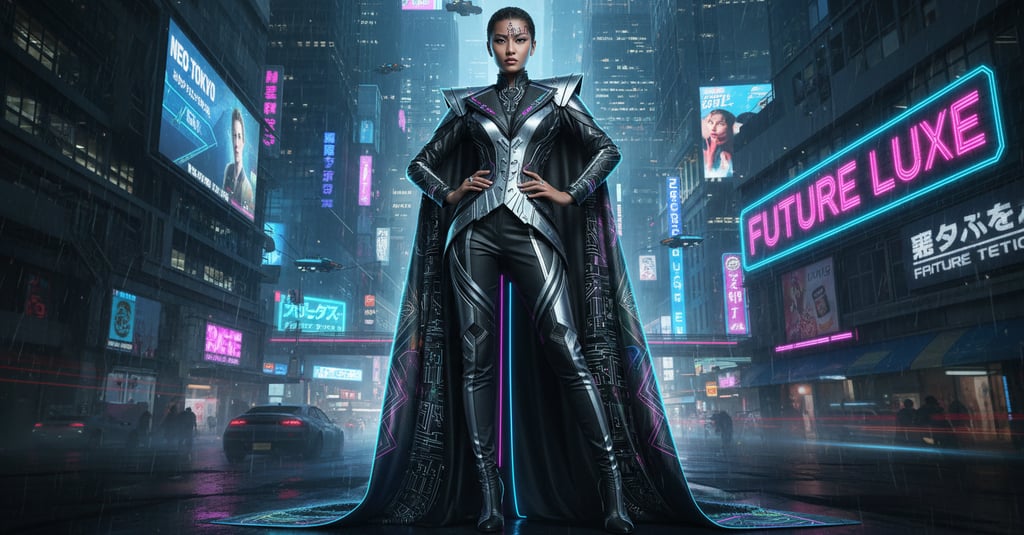
The fashion and entertainment world has always been obsessed with what’s next. For decades, that meant new faces, new trends, and new designers. Today, “what’s next” looks very different: it’s not just human faces walking the runway; it’s AI-generated models dominating campaigns, feeds, and entire brand identities.
At Noir Starr, we live at the intersection of beauty, technology, and storytelling. The question most brands and creators ask us is simple: are AI models just a trend, or are they reshaping the industry for good? The answer is already clear—AI models are no longer a novelty. They’re rapidly becoming a core part of how modern brands show up online.
In this post, we’ll break down what AI models are, why they’re exploding in popularity, what they mean for brands, and how to work with them in a smart, ethical way.
What Exactly Is an AI Model?
In this context, an “AI model” isn’t just the underlying algorithm—it’s the digital persona built on top of that technology. Think of:
Imagine a hyper-realistic virtual model capable of posing, changing outfits, and appearing in any location.
A stylized, editorial character built to match a specific brand’s aesthetic.
A recurring face that exists only in pixels but still has a personality, story, and loyal audience.
Under the hood, these models are powered by generative AI systems that can:
Create photorealistic human figures from text prompts.
Control poses, lighting, clothing, and environment.
Maintain consistent facial features and style over time.
In other words, brands can now “cast” a model that never ages, is always available, and can exist in infinite creative variations.
Why the AI Model Industry Is Booming
The momentum behind AI models isn’t just about novelty. There are several structural reasons brands are moving fast into this space.
Speed and flexibility.
Traditional shoots are powerful but slow: scouting, casting, travel, glam teams, production, and post. AI flips that workflow. Once a brand has an AI model that fits their aesthetic, they can:
Generate new looks in minutes instead of weeks.
Test multiple creative directions before committing to a big campaign.
Adapt visuals in real time for trends, holidays, and product drops.
For digital-first brands that live on social, this agility is a game changer.
Cost Efficiency Over Time
A single large AI model project might require an initial investment—creative direction, persona development, style guides, and reference libraries. However, once the system is in place, the marginal cost of adding new content becomes extremely low.
Instead of:
Booking locations
Paying for logistics
Re-shooting campaigns when products change
Brands can update collections, colors, backdrops, and styling in a fraction of the time and budget.
Infinite Creative Control
AI models let brands explore concepts that would be logistically impossible or prohibitively expensive:
Futuristic cities, alien landscapes, underwater editorials.
Surreal, conceptual visuals that blend fashion, CGI, and illustration.
Highly curated, cinematic shots for every channel—from homepage hero banners to TikTok thumbnails.
This level of control is especially powerful for brands building a strong visual universe around their products.
Global, 24/7 Presence
With AI, a brand doesn’t need to rely on one physical location or a specific time zone. AI models:
“Shoot” in any global setting with a prompt.
Appear consistently across campaigns in different languages and markets.
Are always on call and never overbooked.
For global e-commerce brands, that consistency and availability translates directly into more content and more touchpoints.
What This Means for Human Models
One of the biggest myths about AI models is that they’ll instantly replace human talent. The reality we’re seeing is more nuanced. The industry is moving toward a hybrid ecosystem, where AI and human models coexist and often amplify each other.
Here’s how:
Real people serve as inspiration for many AI models. Human models set the tone, convey emotion, and embody lived experience that designers and brands then translate into AI personas.
Premium human moments: Live events, runway shows, interviews, and behind-the-scenes content—these remain inherently human spaces. AI can’t replace the authenticity of real-time human presence.
Collaborative campaigns: We’re starting to see campaigns where a human and an AI model “co-star,” telling a story about future fashion, technology, and identity.
Instead of asking, “Will AI replace human models?” A better question is, how will brands blend both to tell richer stories?
How Brands Are Using AI Models Right Now
Across fashion, beauty, and lifestyle, we’re seeing several clear patterns in how AI models are being deployed.
E-commerce and Product Visualization
AI models are ideal for scalable catalog content:
Showing the same product on a consistent persona in different colors and fits.
Creating size-inclusive visuals by generating different body types.
Generating region-specific styling—how a jacket is worn in Paris vs. Los Angeles.
This helps shoppers imagine the product on themselves and improves conversion, especially in markets where traditional shoots would be too costly.
Social Media & Always-On Content
Platforms like Instagram, TikTok, and Pinterest require constant visual output. AI models enable:
Daily outfits of the day (OOTDs) without a daily shoot.
Thematic content drops—festival looks, vacation edits, seasonal transitions.
Micro-stories: a recurring AI persona “Living” a lifestyle that reflects the brand’s values.
Instead of brands going dark between campaigns, AI keeps the feed alive.
Brand Worldbuilding
Some brands use AI models as the centerpiece of a larger narrative universe:
A recurring face who “lives” in a stylized city or fictional world.
A character, complete with a backstory, preferences, and relationships, serves as the focal point.
Visual storytelling across the website, social media, email, and even in-store screens.
This is especially powerful for digitally native and niche brands building tight communities.
Creative Testing and R&D
AI models also function as creative labs:
They experiment with new aesthetics before committing to a rebrand.
Testing how different styling directions resonate with audiences.
We are rapidly prototyping campaign ideas to present to internal stakeholders.
Instead of guessing, brands can visualize options and make clearer decisions.
The Ethics of AI Models: What Responsible Use Looks Like
With power comes responsibility. The rise of AI models raises real ethical questions: representation, consent, authenticity, and body image.
From our perspective at Noir Starr, responsible AI modeling includes:
Clear Disclosure
Audiences are increasingly savvy, but transparency matters. When a campaign features AI or mixed AI/human imagery, brands should:
Disclose AI use in a caption or campaign note.
Clearly state that AI images are not candid or documentary.
This builds trust and future-proofs the brand.
Diverse and Realistic Representation
AI can either widen or narrow representation, depending on how it’s used. Responsible brands:
Intentionally build AI models with diverse skin tones, body types, ages, and features.
Avoid hyper-idealized, impossible body proportions.
Respect cultural markers instead of flattening them into generic aesthetics.
In other words, use AI to expand beauty standards, not tighten them.
Consent and Likeness Rights
AI makes it technically easy to approximate real faces—but that doesn’t make it acceptable. Ethical practice means:
Ethical practice involves refraining from copying or closely imitating real people without explicit permission.
It also involves ensuring that AI systems are not trained or prompted to mimic celebrities or existing models in a deceptive manner.
Brands that cut corners here invite legal and reputational risk.
Mental health and body-image awareness
Even if AI models aren’t real, their impact on how people see themselves is. Brands should avoid:
Promoting unattainable, frictionless perfection as the norm is something brands should avoid.
This neglects the fact that audiences may compare themselves to these AI bodies.
Instead, AI can be framed as a creative medium, not a standard for real human bodies to meet.
How to Get Started Working With AI Models
If your brand is curious about AI models but hasn’t taken the leap yet, here’s a simple roadmap.
Define the Role of the AI model.
Ask: What job will this AI persona do for your brand?
E‑commerce visuals?
Social storytelling?
Worldbuilding for a new product line?
Clarity here ensures your AI model feels intentional, not random.
Create a Visual & Personality Blueprint
Treat your AI model like talent with a profile:
Visual traits: age range, features, hair, skin tone, and general vibe.
Style: streetwear, luxury, minimal, experimental, etc.
Personality: playful, mysterious, bold, soft, futuristic.
This blueprint keeps your content consistent across campaigns.
Start With a Limited Pilot
Rather than replacing your entire content pipeline overnight:
Test AI models in one channel (e.g., Instagram or product detail pages).
Compare performance against existing assets.
Gather feedback from your audience.
Use these results to refine both the AI model and the strategy.
Blend With Human-First Storytelling
AI visuals are powerful, but they’re even stronger when paired with:
Human testimonials
Behind-the-scenes footage
Designer or founder perspectives
The future doesn’t belong to AI alone—it belongs to brands that can orchestrate both human and digital narratives cohesively.
The Future of AI Models: Beyond the Static Image
We’re still at the early stage of what AI models can become. The next wave includes:
Short-form AI video: AI models moving, speaking, and interacting in realistic motion.
Interactive experiences: AI personas that respond to users in real time via chat or personalized content.
Virtual events and shows: Entire digital runways or lookbooks starring AI and human models together.
For brands, the opportunity is to think less in terms of “posts” and more in terms of living, evolving digital characters that represent their identity.
Final Thoughts: Why This Matters Now
The AI model industry isn’t just a tech curiosity—it’s a shift in how visual identity is created, scaled, and experienced. Brands that ignore it risk feeling dated; brands that rush in without strategy or ethics risk backlash.
Intentional adoption is the key to success:
Clear creative purpose
Ethical guardrails
Thoughtful integration with human talent and storytelling
AI models are not here to erase humans. They’re here to expand what’s possible in visual storytelling. The brands that win in this new era will be the ones that understand both the power of the algorithm and the irreplaceable depth of human experience.
Luxury
Elevate your brand with our exclusive AI models.
Contact us
Exclusivity
© 2026. All rights reserved.
(609) 901-8073